Thursday, May 07, 2009

I'm Excited About These New "Not Like Your" Intel Ads []

Source: http://feeds.gawker.com:80/~r/gizmodo/full/~3/R7VEbeyF6EA/im-excited-about-these-new-not-like-your-intel-ads

Intel's lifestyle ads have been around forever, in fact, inspiring Apple's own marketing direction in the 80s. But everyone does this now, and so, they're changing things up after all these years.

The campaign has two major slogans: "our rock stars are not like your rock stars", or variations on the "not like your" theme and "sponsoring the future". The first is interesting, and played out like so:

It's true. What and who is important inside the geek world is not important to the mainstream, always. The portrayal of the geek as a hero does a few things, I imagine. It shows mainstream folks the fantasy of what exactly the geek world worships, in a context they can understand—that of the celebrity—even if they don't understand why its such a big deal. To the geeks, the video is clearly ridiculous, and the slogan lets the viewer know that the company is self aware of that fact. At the same time, the fantasy is brought to life that geeks are rock stars, in their own context, but here they get to taste the pop context, too.

The other slogan, "Sponsors of Tomorrow", is pushed nicely in this "our big ideas are not like your big ideas" video:

There's something about this video, humorous, and friendly, yet pointing out the oddity of the geek world, that reminds me of JJ Abrams' new Star Trek.

The videos, unfortunately do not feature the actual inventors. They said it was to avoid internal politics and fights over who would star, but I really just think geeks don't test that well on camera. Except Woz.

The campaign is Intel's most expensive, and they plan to run it three years, in so many variations, comparing the geek world to the real world equivalent! s, notin g their differences, but ultimately drawing parallels. It also is the first not to talk about Intel's products directly, preferring to let go of the idea that people can understand the technology inside as meaningful, moving towards general brand promotion. It's clever, and entertaining and I like these ads a lot, so far.


Read More...

ASUS' Eee PC 1002HAE: a faster 1002HA dressed in Eluminum

Source: http://www.engadget.com/2009/05/07/asus-eee-pc-1002hae-a-faster-1002ha-dressed-in-eliminum/

When you think Eee PC, or netbooks in general, the usual image that comes to mind is thick slab of white plastic. That's certainly true of the Eee PC 1002HA. However, drop the letter "E" into the model number and you've got ASUS' new Eee PC 1002HAE dressed in a swank aluminum skin and 1.6GHz N280 processor within. While the rest of the specs remain unchanged -- 802.11b/g/n, 1GB of memory and 160GB disk, 1.3 megapixel webcam, memory card slot, 3.8-hour Li-Polymer battery, and 10-inch 1,024 x 600 pixel LED backlit display -- the new shell drops the weight from 1.45kg to 1.2kg for a savings of about half a pound. At the moment, this model is either Japanese-only or at least a Japanese-first (unusual for ASUS) with a May 16th launch for the tax inclusive price of ¥49,800 (about $506).

[Via Engadget Japanese]

Filed under:

ASUS' Eee PC 1002HAE: a faster 1002HA dressed in Eluminum originally appeared on Engadget on Thu, 07 May 2009 02:42:00 EST. Please see our terms for use of feeds.

Read | Permalink | Email this | Comments

Read More...

Shinoda's giant curved plasma weighs less than your father's first laptop

Source: http://www.engadget.com/2009/05/07/shinodas-giant-curved-plasma-weighs-less-than-your-fathers-fir/

We've been keeping an eye on Shinoda Plasma's curved PTA (plasma tube array) technology since 2007. What started as a single 43-inch prototype grew to 125-inches in 2008. Now, Shinoda is showing off a 145-inch diagonal prototype consisting of six PTA panels stitched together in a 2-meter x 3-meter matrix. The 960 x 720 pixel resolution might not impress you until you consider the weight: just 7.2-kg (15.8-pounds) thanks to the slim PTA panels measuring just 1-mm thick. Impressive compared to 108-inch LCDs that weigh in at 196-kg (430-pounds) and the original Osborne 1 "laptop" that weighed 24.5-pounds. With any luck, these giant displays will be commercialized for signage so we can all simulate crushing motions with two hands.

Filed under:

Shinoda's giant curved plasma weighs less than your father's first laptop originally appeared on Engadget on Thu, 07 May 2009 03:59:00 EST. Please see our terms for use of feeds.

Read | Permalink | Email this | Comments

Read More...

Dell's $299 Mini 10v netbook spotted, SSD options added

Source: http://www.engadget.com/2009/05/07/dells-299-mini-10v-netbook-spotted-ssd-options-added/

Looks like the first iteration of the Mini 10 evolution is getting ready for retail. The Mini 10v (aka, "Bear" or model 1011) has just made it's first appearance in Dell's May catalog with "mid-May" anticipated availability. The 10v swaps out the Z-series Atom for the netbook standard N270 while remaining true to its 120GB disk, 1GB memory, XP, and 1.3 megapixel webcam origins. The big news here is price: the Mini 10v costs $100 less than the base Mini 10. Also spotted on Dell's retail site are new 32GB or 64GB SSD options for the current Mini 10 for an extra $75 or $125, respectively. Sorry kids, no Android option yet (which might not be a bad thing). SSD screengrab after the break.

[Thanks, Willy N.]

Update: The Mini 10 can now be ordered with Ubuntu, hooray!

Read -- Mini 10v [see last page, Warning: PDF]
Read -- SSD [click Hard Drive view]

Continue reading Dell's $299 Mini 10v netbook spotted, SSD options added

Filed under:

Dell's $299 Mini 10v netbook spotted, SSD options added originally appeared on Engadget on Thu, 07 May 2009! 06:22:0 0 EST. Please see our terms for use of feeds.

Permalink | Email this | Comments

Read More...

ASUS Eee Box 206 reviewed; has HDMI but can't handle high-def

Source: http://www.engadget.com/2009/05/07/asus-eee-box-206-reviewed-has-hdmi-but-cant-handle-high-def/

ASUS Eee Box 206 reviewed; has HDMI but can't handle high-def
Despite earlier claims to the contrary, it looks like the new ASUS Eee Box, the B206, isn't quite the high-def powerhouse it was intended to be. According to Register Hardware's review, the poor little thing had a real hard time playing even 720p video, only managing to render every frame when video was played back in DirectX Video Acceleration-capable players. That rules out many popular choices like QuickTime and VLC, and you can forget about 1080p entirely. Benchmark scores were low, as you'd expect given the standard 1.6GHz Atom N270 internals and 1GB of memory, leaving it best suited for casual web surfing and SD video playback -- and making it seem like not much of an upgrade over its predecessor.

Filed under: ,

ASUS Eee Box 206 reviewed; has HDMI but can't handle high-def originally appeared on Engadget on Thu, 07 May 2009 08:46:00 EST. Please see our terms for use of feeds.

Read | Permalink | Email this | Comments

Read More...

Wednesday, May 06, 2009

Verizon debuts MiFi 2200 portable EV-DO router

Source: http://www.engadget.com/2009/05/06/verizon-debuts-mifi-2200-portable-ev-do-router/


It was hardly a secret 'round these parts, but Verizon Wireless is finally ready to confess to that MiFi 2200 Intelligent Mobile Hotspot we've heard so much about. Like the Novatel unit it's based on, the device harbors 802.11b/g and EV-DO Rev. A radios, and can share a 3G Verizon connection with up to five different WiFi devices simultaneously. Battery life is pegged at four hours of active use, and 40 hours of standby on a single charge. Data plans include a $40 monthly subscription for 250MB and 10 cents per MB overages, or $60 for 5GB and half the overages price. If you want to forgo the subscription and pay full-price for the MiFi, you can pick up a 24 hour "DayPass" for $15 -- any way you slice it, you'll be paying good money for the privilege of using the thing. The MiFi 2200 itself hits stores May 17th, and will run you $100 after a $50 rebate.

Filed under: ,

Verizon debuts MiFi 2200 portable EV-DO router originally appeared on Engadget on Wed, 06 May 2009 18:40:00 EST. Please see our terms for use of feeds.

Permalink | Email this | C! omments< /a>

Read More...

Mvix Nubbin Is the World's Smallest Wireless-N Adapter...And It's Cheap [Wi-Fi]

Source: http://feeds.gawker.com/~r/gizmodo/full/~3/YoBspwi5KZE/mvix-nubbin-is-the-worlds-smallest-wireless+n-adapterand-its-cheap

The Mvix Nubbin protrudes less than 2cm from your computer as it adds 802.1n Wi-Fi to your computer, making it the world's smallest Wireless-N adapter. It's also competitively priced at $40.

Compatible with PCs and Macs, the Mvix Nubbin can be used on 802.1b/g/n networks despite its stature of just 3/4 of an inch. I'm ever so skeptical about the Nubbin's ability to ferret a weak signal compared to its larger brethren, but I'll give the little guy the benefit of the doubt while adding that it ships tomorrow from retailers around the web. [Mvix]


Read More...

LG's WirelessHD LH80 LCD TVs released in Korea

Source: http://www.engadget.com/2009/05/06/lgs-wirelesshd-lh80-lcd-tvs-released-in-korea/


With its 2009 LED-backlit LH90 LCDs already announced, LG has decided its LH80 line should be next up, its first of many -- following Panasonic's lead -- packing a Wireless HD media box to stream any HDMI, USB, or OTA content to the TV. Available in Korea is just this 55-inch model for about 5.1 million South Korean won ($4,008) but you can check out our CES '09 Wireless HD demo for a better look at the box and display while we wait for its LH85 branded U.S. cousin to make an appearance later on this year.

Filed under: , ,

LG's WirelessHD LH80 LCD TVs released in Korea originally appeared on Engadget on Wed, 06 May 2009 13:57:00 EST. Please see our terms for use of feeds.

Read | Permalink | Email this | Comments

Read More...

Virgin Media testing DOCSIS 3.0 to new limits with 200Mbps, 3D and 1080p

Source: http://www.engadget.com/2009/05/06/virgin-media-testing-docsis-3-0-to-new-limits-with-200mbps-3d-a/


Forget 101Mbps Internet service or even the 160Mbps available in on J:COM in Japan, Virgin Media is about to put a lucky few of its slick new modems to real work, testing 200Mbps internet, "full HD" broadband content (we take that to mean 1080p) and 3D. All delivered via DOCSIS 3.0, the downside is that at least for the next six months this pilot project will be extended only to about 100 "lead adopters" around Ashford, Kent for testing. We've heard all we need to get packed for a move, how about you?

[Via Hexus]

Filed under: ,

Virgin Media testing DOCSIS 3.0 to new limits with 200Mbps, 3D and 1080p originally appeared on Engadget on Wed, 06 May 2009 14:38:00 EST. Please see our terms for use of feeds.

Read | Permalink | Email this |  Comments

Read More...

Just How Big is the Enterprise's Viewscreen? [Space]

Source: http://feeds.gawker.com/~r/gizmodo/full/~3/hwdBi5F8nzU/just-how-big-is-the-enterprises-viewscreen

I woke up at 3AM last night with my mind racing. The extremely important question that woke me up? How big is the Enterprise's viewscreen? So I decided to do the math.

First off, it depends on which Enterprise you're talking about. The original Enterprise of the '60s, which I've been watching Season 1 of on Blu-ray (quite a good restoration, btw), had what seemed like a tiny ass screen when compared to the IMAX-like experience of the new movie Enterprise. But it's not actually that small.

Using the combined knowledge of the Star Fleet Technical Manual and some screenshots of the episodes, I was able to determine that the screen is a 136-inch display with a 1.73:1 aspect ratio. That's actually smaller than the retina-searing 150-inch Panasonic plasma that we played with before. Yes, Adam Frucci and various captains of industry that have way too much money have viewed things in their own home on a larger display than a captain of a STARSHIP.

But Picard isn't going to be showed up by 21st century technology. His glorious Enterprise D has a 212-inch screen with a 1.92:1 aspect ratio, which is big enough for Riker to jam chairs through while Picard's off in a fantasy land with Whoopi Goldberg. Nice job, Riker.

Not only is this screen gigantic, it supposedly displays stuff in three-dimensions, shifting views or something so Jean-Lu! c can pu t a face to Troi's feelings of "he's hiding something". The Star Trek Wiki explains thusly:

While it is a subtle effect, the viewscreen seen throughout Star Trek: The Next Generation clearly displayed 3-D images. This effect was created in some scenes by providing multiple angles on the viewer, with the image on screen displayed at a corresponding angle, rather than a flat, single angle shot.

But what about the newest technology? What have we learned from years of actual consumer electronics development that the tech-consultants on the movie set could incorporate into the latest iteration of the Enterprise? "Bigger is better."

The display on new-Kirk's ship looks massive, but only because it's so wide. If you're measuring the screen diagonally in display-talk, it's around 326-inches, which is larger in absolute terms than even Picard's screen. It also has a 3.25:1 display ratio, making it wider than most film ratios. But if you're talking pure width, it measures about 26 feet across. Quite impressive.

If they ever do remake TNG, I suspect that the viewscreen will wrap entirely around the side of the bridge all the way to the back where neo-Worf and neo-Geordi will be able to see what's going on behind the Enterprise. It's easier to turn your head to see a display than to tell someone to press a button to change the view.

So yes, this is our dream for when we go into space. Not only will we be able to be in space, we'll have really, really big screens to watch stuff on.


Read More...

ZyXEL's DMA-2500 streams in 1080p content from your network

Source: http://www.engadget.com/2009/05/06/zyxels-dma-2500-streams-in-1080p-content-from-your-network/


The world needs another set-top-box like it needs another Kim Jong-Il, but we'll do our best to stifle the sighs and present to you the ZyXEL DMA-2500. This well-specced box streams in material up to 1080p from any networked storage device, is DLNA 1.5 certified and supports more formats than it would be healthy for us to list. The outfit also claims that it'll handle material laced in DRM, but the vagueness of it all has us skeptical. At any rate, users can also indulge in internet TV and online radio, and there's an S-Video, composite and HDMI port to get it onto your television. Finally, the unit even includes a USB port which can presumably be used for adding local storage or a USB WiFi adapter. It's filtering out now across the pond for the somewhat hard-to-swallow price of €223 ($296).

[Via HDTVInfo]

Filed under: ,

ZyXEL's DMA-2500 streams in 1080p content from your network originally appeared on Engadget on Wed, 06 May 2009 09:59:00 EST. Please see our terms for use of feeds.

Read | Permalink | Email this | Comments

Read More...

Amazon Kindle DX first hands-on (with video!)

Source: http://www.engadget.com/2009/05/06/amazon-kindle-dx-first-hands-on/


We just got a quick first in-person look at Amazon's new Kindle DX. It looks bigger! Some quick thoughts on the device:

  • It's not really drastically different from the Kindle 2. Not in any way. The ability to auto-rotate is nice, and the big screen is definitely easier on the eyes when it comes to reading newspapers, but largely this is the same beast.
  • The screen looks great. It may just be the demo units here, but the blacks seem to be darker than they are on the Kindle 2. We'll have to hold this judgment for when we've got a review unit in our hands.
  • Screen refresh is largely unchanged. You'll still see those black flashes when you turn the page.
  • The keyboard seems better to us than the Kindle 2's. The keys are more raised, and there's more real estate for typing. It's still not an awesome experience, but it's improved.
  • The size difference really is notable. The DX is a large device. It's not the kind of thing you'll be throwing into a purse, though it's not so large that you wouldn't consider it over the Kindle 2. In fact, if we had to choose right now, the Kindle DX wins hands-down.
  • $489 is a lot of money for a device like this. Amazon is really going to have to show some considerable cuts on pricing for their deals with the NYT / schools to make this attractive to end-users.
And check out the videos after the break!

Continue reading Amazon Kindle DX first hands-on (with video!)

Filed under:

Amazon Kindle DX first hands-on (with video!) originally appeared on Engadget on Wed, 06 May 2009 12:37:00 EST. Please see our terms for use of feeds.

Permalink | Email this | Comments

Read More...

Dell Studio XPS 13 reviewed, loved, and respected

Source: http://www.engadget.com/2009/05/06/dell-studio-xps-13-reviewed-loved-and-respected/


There's been much talk of Dell's leather-bound Studio XPS 13 ever since it made its first appearance... and now the fine folks over at Hot Hardware have put it through the motions for you, and we can tell you that they really liked what they found. Really really. In terms of overall build, they were very impressed, specifically with the chunky hinges and that decorative leather strip (the one which we found to be rippled in our own hands-on). They also claim that the Studio XPS 13 might have the "best keyboard" they've "ever touched" on an ultraportable, and they similarly loved the trackpad's clickiness (although we found the trackpad cramped and awkwardly placed). Performance-wise, they consider themselves blown away by the laptop, though they noted a few hiccups here and there (while tabbing around Firefox), and said that they felt the Studio XPS 13 outperforms others in its class. Hit the read link for the full on, glowing review -- one more shot after the break.

Continue reading Dell Studio XPS 13 reviewed, loved, and respected

Filed under:

Dell Studio XPS 13 reviewed, loved, and respected originally appeared on Engadget on Wed, 06 May 2009 12:53:00 EST. Please see our terms for use of feeds.

Read | Permalink | Email this | Comments

Read More...

Samsung's PRAM chips hit mass production in June

Source: http://www.engadget.com/2009/05/05/samsungs-pram-chips-go-into-mass-production-in-june/

Mark your calendars, memory enthusiasts, for the date you've all been waiting for. Samsung's phase change RAM will go into mass production starting in June. The PRAM chips -- not to be confused with paramter RAM, often what you curse / reset if you've got a Mac on the fritz -- can rewrite data without having to erase what's already on there first. The company's still boasting it's 30x faster and has 10x the lifespan of traditional flash memory. You want to know what gadgets and gizmos will first use these chips? Us too, but we're all gonna have to wait because Sammy's not talking yet.

Filed under:

Samsung's PRAM chips hit mass production in June originally appeared on Engadget on Tue, 05 May 2009 21:39:00 EST. Please see our terms for use of feeds.

Read | Permalink | Email this | Comments

Read More...

RealD LP makes 3D projection a touch more portable

Source: http://www.engadget.com/2009/05/05/reald-lp-makes-3d-projection-a-touch-more-portable/

It may be stretching the definition of what we'd call "portable" around here by quite a large margin, but RealD's touting its latest creation as the world's first mobile, single-projector 3D solution. The RealD LP can blast video on screens up to 17 feet wide with a 150:1 contrast ratio -- glasses still required for the full effect, of course. No price mentioned, but we reckon it's still in the realm of "if you have to ask, you can't afford it."

Filed under: ,

RealD LP makes 3D projection a touch more portable originally appeared on Engadget on Tue, 05 May 2009 23:32:00 EST. Please see our terms for use of feeds.

Read | Permalink | Email this | Comments

Read More...

LaCie adds to NAS catalog with Big Disk, d2 Network

Source: http://www.engadget.com/2009/05/06/lacie-adds-to-nas-catalog-with-big-disk-d2-network/

Looking to add some color to your extensive NAS collection? Well, you find it here, save for the company's characteristic blue button. If you're willing to look past that cold, aluminum exterior, however, LaCie's Big Disk and d2 Network storage solutions should serve you well. The former sports up to 1.5TB capacity with eSATA port for expansion, while the latter goes up to 3TB by concactenating two drives in RAID 0. Both support the usual array of backup software, including Apple's Time Machine, and work with all DLNA-compliant devices. LaCie says they're on sale now, $190 for d2 Network and $380 for Big Disk Network.

Filed under:

LaCie adds to NAS catalog with Big Disk, d2 Network originally appeared on Engadget on Wed, 06 May 2009 00:56:00 EST. Please see our terms for use of feeds.

Read | Permalink | Email this | Comments

Read More...

Samsung's HMX-H106 Full HD camcorder with 64GB SSD takes first peek at retail

Source: http://www.engadget.com/2009/05/06/samsungs-hmx-h106-full-hd-camcorder-with-64gb-ssd-gets-first-pe/

Here's one that might trigger an electrical pulse across the synapses, Samsung's HMX-H106. This tiny Full HD camcorder with a 64GB SSD tooling about its inanimate innards has been quietly preparing for May launch ever since its reveal back in January at CES. That's enough storage for an impressive 12 hours of 1920 x 1080 pixel video with further expansion by SD/SDHC card. Word has it that it launched this morning in its hometown Korea and is set for a May 22nd Stateside launch according Amazon.com. 900 bucks for a H.264 camcorder with an optical image stabilized Schneider Kreuznach Varioplan HD lens touting a 10x zoom and 37mm wide-angle focal length -- is that new baby worth it?

Read -- Korea launch
Read -- Amazon May 22nd pre-order

Filed under:

Samsung's HMX-H106 Full HD camcorder with 64GB SSD takes first peek at retail originally appeared on Engadget on Wed, 06 May 2009 02:58:00 EST. Please see our terms for use of feeds.

Permalink | Email this | Comments

Read More...

SmartQ 7 is an Internet Tablet with dedicated FN

Source: http://www.engadget.com/2009/05/06/smartq-7-is-an-internet-tablet-with-dedicated-fn/

Oh look, another 7-inch device with an identity crisis. Too big to be called a smartphone, definitely not a netbook, it must be a MID, UMPC, or maybe a PMP. Wait, we see it now, the SmartQ 7 aspires to be an "Internet Tablet." Good, because its WVGA (800ish x 480 pixel) resolution is the same as Toshiba's 4.1-inch TG01 (to name just one smaller device) only stretched across a 7-inch touchscreen display -- not exactly ideal for video in 2009. The SmartQ 7 runs an unspecified Linux distro with specs that include WiFi, a USB-host mode, stereo speakers, and up to 2-days of music off a single charge to its 4500mAh Li-Poly battery. More importantly, there's a dedicated FN button along the top for instant fun. No launch date or price but we've got the backside, front, after the break.

[Via Pocketables]

Continue reading SmartQ 7 is an Internet Tablet with dedicated FN

Filed under: , ,

SmartQ 7 is an Internet Tablet with dedicated FN originally appeared on Engadget on We! d, 06 Ma y 2009 03:45:00 EST. Please see our terms for use of feeds.

Read | Permalink | Email this | Comments

Read More...

Tuesday, May 05, 2009

The Problems with a Hackintosh Netbook, Six Months Out [Hackintosh]

Source: http://feeds.gawker.com/~r/lifehacker/full/~3/dkfTaZL0zfA/the-problems-with-a-hackintosh-netbook-six-months-out

More than a few Lifehacker readers were probably intrigued when reports popped up about how easy it was to install OS X on an MSI Wind netbook (and it's gotten easier lately with the Dell Mini 9). Before you splurge on what seems like a cheap, portable MacBook replacement, consider the experiences of Wired GadgetLab's Brian X. Chen, as he dealt with software, hardware, and hardware design problems. He's not alone, either—Dave "MacSparky" Sparks and Steven Sande at The Unofficial Apple Weblog are near the breaking point with their Mini 9s. Got a counter-argument for your beloved HackBook? Agree that it's best to go official with Apple products? Tell us your take in the comments. [Wired GadgetLab]


Read More...

Manhattan Mapped Without a Horizon [Art]

Source: http://feeds.gawker.com/~r/gizmodo/full/~3/OMGYARBJ7aE/manhattan-mapped-without-a-horizon

It's rare that we get excited over maps, but this idea by graphic designers Jack Schulze and Matt Webb would be great for GPSs, combining 3D, first person and overhead views into one übermap.

The art project, called Here & There, bends the world into horizon-less, roller coaster loop topography, which allows the viewer to see their position from the first person perspective (complete with those 3D buildings that usually just get in the way) alongside the route/terrain to come.

For now, the designers' work is available in limited edition prints only that go for $65 (per a set of two). But we can still dream that someone like Google, Apple or Garmin might come around and drop a big pile of money on the small agency before automating this visualization for real time navigation. [Here & There and Background Info via FastCompany]

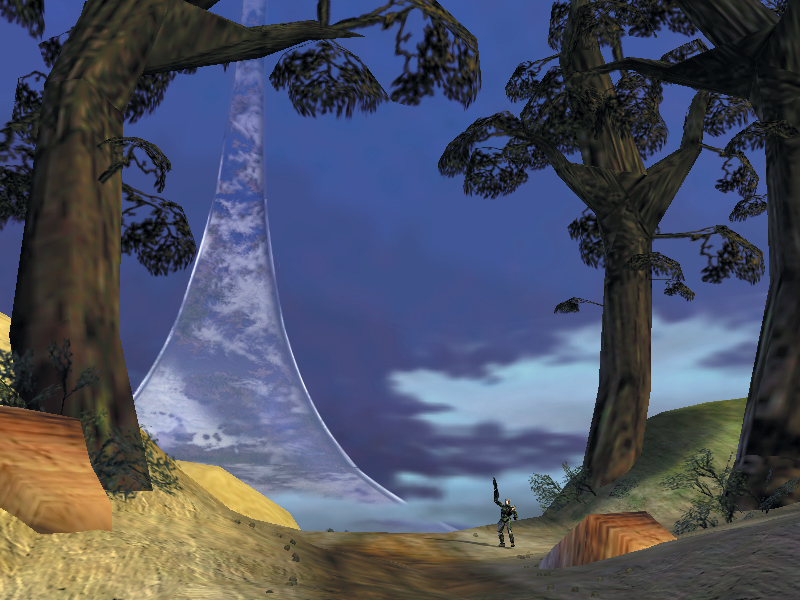
Also check out these two similarly themed, Dyson Spheresque images. The first, Halo. The second, RingWorld.


Read More...

DDRdrive's RAM-based SSD is snappy, costly

Source: http://www.engadget.com/2009/05/05/ddrdrives-ram-based-ssd-is-snappy-costly/


In the race for ever faster storage, manufacturers have increasingly been looking towards the PCIe bus. And while we've seen lots of interesting things out of companies like Fusion-io, it will probably be a few long moments before anything comes around that's feasible, or reasonable, for the consumer. That said, PC Perspective has put in some quality time with the DDRdrive X1, which places 4GB DRAM and 4GB NAND in parallel on a full height PCIe card, keeping that volatile memory of yours safely backed up on a static disk, just in case. According to the reviewer, this device offers the user nothing less than "pure unadulterated random IO" that is "unmatched by any other device available." Other pluses include its cost (I / O operations per second are calculated at about a fifth of the ioDrive) and snappy custom drivers for both 32 and 64-bit members of the Windows family (Linux drivers are promised for the near future). The Cons? This bad boy is currently limited to 4GB, and it'll run you a cool $1495. Not exactly the stuff dreams are made of for 99% of our readers, but if you should happen to find yourself the admin for an eneterprise server of some type (as many of us do, from time to time) this might be something worth looking into.

Filed under:

DDRdrive's RAM-based SSD is snappy, costly originally appeared on Engadget on Tue, 05 May 2009 12:52:00 EST. Please see our terms for use of feeds.

Read | Permalink | Email this | Comments

Read More...

Eye-Fi's 4GB WiFi Video cards now with more options for Internet regret

Source: http://www.engadget.com/2009/05/05/eye-fis-4gb-wifi-video-cards-now-with-more-options-for-internet/

You know that video mode you haven't used since first bought your compact point and shoot? Right, the one that does 720p HD video if you've purchased a camera within the last 6 months? Well, Eye-Fi's back to remind you that it's now selling its $99 Eye-Fi Explore Video (with geotagging) and $79 Eye-Fi Share Video SDHC cards nationwide. They've also enabled video sharing with Picasa, Photobucket, and SmugMug in addition to Flickr and YouTube. The result is dead-simple, un-edited direct-to-internet video sharing without the need for a tethered computer. Of course, these cards work equally well for dumping your films and photos over WiFi to your Mac or PC at home -- but why live your life in a bubble?

Filed under: , ,

Eye-Fi's 4GB WiFi Video cards now with more options for Internet regret originally appeared on Engadget on Tue, 05 May 2009 08:00:00 EST. Please see our terms for use of feeds.

Read | Permalink | Email this | Comments

Read More...

Gmail gets pushed to select BlackBerries

Source: http://www.engadget.com/2009/05/05/gmail-gets-pushed-to-select-blackberries/

Gmail gets pushed to select BlackBerries
There's a new push purveyor on the mobile scene, come to show the competition what's what -- despite being completely dependent on that competition, at least for the moment. Hot on the heels of RIM adding a push API, Google is enabling some BlackBerry users to get their Gmail and Google Calendar goodies shoved straight to their handsets. However, there are a number of shortcomings here that make this addition somewhat limited in usefulness. For one thing users have to be connecting to BlackBerry Enterprise Server instances, and furthermore those instances have to be backed by Microsoft Exchange. Additionally, only 250 users per Enterprise Server instance can get their mobile Gmail on, changes made to appointments on a handsets cannot be pushed back to Google Calendar, and to top it all off searching for Gmail messages still requires a separate app. Updates and improvements are coming, but until then it's caveat emailor.

Filed under:

Gmail gets pushed to select BlackBerries originally appeared on Engadget on Tue, 05 May 2009 08:19:00 EST. Please see our terms for use of feeds.

Read | Permalink | Email this | Commen! ts

Read More...

What's in Store for Verizon FiOS: Slingbox-Like Streaming and More [FiOS]

Source: http://feeds.gawker.com/~r/gizmodo/full/~3/Gh30GPVbtgY/whats-in-store-for-verizon-fios-slingbox+like-streaming-and-more

Gear Live had a sit-down with a senior rep from Verizon and found a few tasty hints as to what's in FiOS's future. Most exciting? They're working on a Slingbox-like service for streaming live TV.

That content streaming feature, confirmed by senior VP Eric Rabe, is definitely in the works, pending the resolution of some agreements (we imagine they'll have many tiresome meetings with the networks before that gets ironed out). In addition, they'll be adding support so the FiOS box can stream video content from networked PCs (and Macs)—at the moment, only audio and photos are supported, so this'll be a nice change.

Not so interesting is the distressing news that Verizon has apparently discovered social networking. That means Facebook and Twitter support in the form of widgets, because lord knows that's what we all need. The Twitter widget could be used to discuss programs as they air, in case you don't have a laptop or friends.

An interesting tidbit: Looks like Verizon has, right now, the capability to bring us 100Mbps internet, but they've made the decision not to offer it at the moment. Their reasoning is that their highest speed plans are already not particularly popular, and, oddly, that there's "no practical use" for such blazing speed.

And finally, it looks like they'll be making the guide widescreen and HD instead of the positively archaic full-screen guide they use now. HD for all! [Gear Live]


Read More...

Microsoft, take a page from Wolfram Alpha. Spend ~$0, launch in social channels, let others call it "awesomer!" - http://ping.fm/WFmWP

Read More...

Wolfram Alpha and Google Tested Head-To-Head [Obvious]

Source: http://feeds.gawker.com/~r/gizmodo/full/~3/HdYuJgPpnh8/wolfram-alpha-and-google-tested-head+to+head

Technology Review did something obvious with their access to Wolfram Alpha: they plotted the computational search engine against Google. The results? As we knew, Wolfram Alpha is no Google. It's completely different, and awesome.

Its makers have never appreciated sensationalist "Google Killer!" labeling, and rightly so: Wolfram Alpha excels at interpreting huge data sets, and only at interpreting huge data sets. A revealing taste of the contrast from TR:

SEARCH TERM: Sydney New York

WOLFRAM ALPHA: I got tables showing the distance between the two cities in miles, kilometers, meters, even nautical miles; a map of the world with the optimal flight path; and the fact that the trip spans 0.4 of the earth's circumference. I learned how long it would take to make the trip: 18.1 hours flying; 13 hours for a sound wave, 74 milliseconds for a light beam in fiber, and 53 milliseconds for a light beam traveling in a vacuum. I also got comparative populations, elevation in meters, and current local times.

GOOGLE: I got a mix of things: a form for finding flights between Sydney and New York; a Google Maps-plotted list of businesses in New York City that contain the word "Sydney"; and links to the municipal government of Sidney, a small town in upstate New York.

It's also a huge nerd:

SEARCH TERM: Aspirin Tylenol

WOLFRAM ALPHA: Alpha gave me molecular diagrams for aspirin and acetaminophen and lots of scientific information co! mparing their molecular weights, boiling points, vapor pressure, and so forth.

GOOGLE: Usefully (to nonchemists suffering from headaches), the top link was to a Wiki-answers page telling people whether they can take aspirin and Tylenol together. Other links gave information about toxicity, danger to kidneys, and the like.

In other words, Wolfram Alpha is like a beefed-up, research-oriented take on Google's extras (stock price, calculator, unit conversion), with Aspergers.

I'm aware of the theoretical differences between the two, and I'm sure Wolfram Alpha's creators' blood would boil at the thought, but the engine's most natural home might be as a direct complement to Google, as a tab on their homepage or as a replacement for their modest current nonsearch functions. Anyway, TR has plenty more comparative search tests, and they give a pretty full picture of what you can expect when this thing finally goes public. [Technology Review]


Read More...

MSI Wind U123 netbook now being stocked by US retailers

Source: http://www.engadget.com/2009/05/05/msi-wind-u123-netbook-now-being-stocked-by-us-retailers/

If you've been waiting the edge of your seat for MSI's Wind U123, sit back and relax for now. The 10.2-inch WSVGA netbook's now officially either stocked up or available for pre-order from online US retailers, with all the usual accoutrements: 1.66GHz Intel Atom N280, integrated graphics, 1GB RAM, 160GB HDD, card reader, 802.11g/n, 6 cell battery, and Windows XP Home. All are priced between $350 and $380, with Frosty Computers so far being the only option so far for customization. Color options are red and blue, and if that doesn't suit you well, may we suggest any of the other dozens of netbooks with the exact same spec sheets?

[Via Portable Monkey]

Read - Newegg
Read - Amazon
Read - J&R
Read - Frosty Computers

Filed under:

MSI Wind U123 netbook now being stocked by US retailers originally appeared on Engadget on Tue, 05 May 2009 05:16:00 EST. Please see our terms for use of feeds.

Permalink | Email this | Comments

Read More...

EagleTec's NanoSac MicroSD Card reader makes mouse balls look big

Source: http://www.engadget.com/2009/05/05/eagletecs-nanosac-microsd-card-reader-makes-mouse-balls-look-bi/

We've got a thing for size, who doesn't? So check this USB 2.0 NanoSac MicroSD Card Reader from EagleTec. You can casually carry it around in any empty USB slot and then slip in your MicroSD/MicroSDHC card when you need a quick read/write. It's like EagleTec's Nano flash drive except with removable flash. For $18, we say why not. Hot NanoSac in the jack action after the break.

[Via Brando]

Continue reading EagleTec's NanoSac MicroSD Card reader makes mouse balls look big

Filed under:

EagleTec's NanoSac MicroSD Card reader makes mouse balls look big originally appeared on Engadget on Tue, 05 May 2009 05:59:00 EST. Please see our terms for use of feeds.

Read | Permalink | Email this | Comments

Read More...

Renesas's 1080p-decoding processor coming soon to a cell phone near you

Source: http://www.engadget.com/2009/05/05/renesass-1080p-decoding-processor-coming-soon-to-a-cell-phone-n/

Renesas's 1080p-decoding processor coming soon to a cell phone near you
Plenty of modern cell phones have HD-quality screens on them, but few can manage any sort of high-definition video content at a respectable frame rate. That's set to change with the release of the Renesas SH7370, a chip we first got wind of back in December with its promise to offer 1080p video at 30fps in a package small (and efficient) enough to be included in a handset. The first units are now shipping to manufacturers, and while the size has increased (it's about 1cm square vs. the 6.4 x 6.5mm package previously discussed) it's still impressively small given its functionality: 1080p H.264 video decoding and encoding along with on-chip Dolby Digital 5.1-channel output. Overkill? Maybe for now, but you might change your mind when the first head-mountable satellite speakers with subwoofer seat cushions hit retail.

Filed under: , ,

Renesas's 1080p-decoding processor coming soon to a cell phone near you originally appeared on Engadget on Tue, 05 May 2009 06:59:00 EST. Please see our terms for use of feeds.

Read | Permalink | Email this | Comments

Read More...

Monday, May 04, 2009

Samsung's 850 PAVV plasma teases the 1-inch thick mark

Source: http://www.engadget.com/2009/05/04/samsungs-850-pavv-plasma-teases-the-1-inch-think-mark/


The plasma industry may be teetering on the edge of certain doom (okay, so maybe that's exaggerating it... a little), but Samsung's still pushing the envelope. Over in South Korea, the company just outed its latest PDPs, the 850 PAVV lineup. Aside from being 40 percent more power efficient, 20 percent lighter and 120 percent more seductive than the prior generation, the new 50- and 58-inch sets also boast DLNA support, a USB 2.0 socket, DivX compatibility and a rather striking stand. The real kicker? The 29 millimeter depth, which equates to just over one inch thick for those who abhor the metric system. There's no word on when these beauties will hit the streets, but we're guessing Panasonic will be keenly interested in knowing.

Filed under: , ,

Samsung's 850 PAVV plasma teases the 1-inch thick mark originally appeared on Engadget on Mon, 04 May 2009 08:07:00 EST. Please see our terms for use of feeds.

Read | Permalink | Email this | Comments

Read More...

RIM's BlackBerry Curve 8900 officially hitting AT&T in "early summer"

Source: http://www.engadget.com/2009/05/04/rims-blackberry-curve-8900-officially-hitting-atandt-in-early-su/


Ah, ha! So the rumors were true. Just a day after we heard that RIM's BlackBerry Curve 8900 would be making its way from T-Mobile over to AT&T comes this -- official confirmation from the carrier itself. Loaded with WiFi, GPS and a 480 x 360 resolution display, this 'Berry includes free AT&T WiFi at over 20,000 hotspots (with an unlimited data plan, ironically enough) and a 3.2 megapixel camera. There's also a microSD / SDHC slot that supports cards up to 16GB in size, and while AT&T's not being very forthcoming with pricing (as in, there's no word given at all), loyal customers can expect it to land sometime in "early summer." In other words, all this release has done is extinguish the rumor fires -- 'preciate it, Ma Bell.

Filed under:

RIM's BlackBerry Curve 8900 officially hitting AT&T in "early summer" originally appeared on Engadget on Mon, 04 May 2009 09:27:00 EST. Please see our terms for use of feeds.

Read | Permalink | Email this | Comments

Read More...